REVIEW · PATTAYA
Pattaya: The Sanctuary of Truth Admission Ticket
Book on GetYourGuide →Operated by OTO TRIP SERVICE CO., LTD · Bookable on GetYourGuide
Wood, philosophy, and sea air in one temple. I love the hand-carved wooden scenes that turn every wall into a story, and I love that your ticket includes an English-guided tour that helps you actually read what you’re seeing. One possible drawback: mid-day visits can feel crowded, so the site may not feel as quiet as you’d hope for photos.
This place is a temple and a museum, built entirely from wood and shaped into an open-air masterpiece by the shoreline. The biggest wow factor for me is how the building is made: interlocking wood parts with no nails, screws, bolts, or metal fasteners mentioned in visitor accounts, so you can’t help but slow down and look closely.
Plan on 2 to 4 hours total, and treat it like a sacred site with rules. Shorts and sleeveless shirts aren’t allowed, smoking and alcohol are banned, and video recording plus drones are not permitted—though shawls and sarongs are available for rent if you arrive too casual.
In This Review
- Key highlights to notice before you go
- Sanctuary of Truth’s wooden carvings: why this temple feels different
- Ticket value: what you pay for with the $15 admission
- Entering the site: voucher exchange and timing your arrival
- The guided museum tour (45–60 minutes): how the guide changes everything
- Walking the temple after the tour: photos, details, and the “still building” feel
- Dress code and site rules: what will get you stopped
- Day vs night session in Pattaya: pick the rhythm that suits you
- Add-ons and on-site extras: what’s optional and what to think about
- Who should book, and who should rethink
- Should you book the Sanctuary of Truth ticket in Pattaya?
- FAQ
- How long does the Sanctuary of Truth visit take?
- Is the guided tour included with the ticket?
- What are the opening times for day and night sessions?
- What times do English tours run?
- Do I need to exchange a voucher for tickets?
- What should I wear to enter?
- Can I record video or use a drone?
- Are pets allowed?
- Is there free cancellation?
- Is the site wheelchair accessible?
Key highlights to notice before you go

- Fully wooden, carved like a living encyclopedia: you’ll see symbols tied to belief systems and traditional Thai craftsmanship
- Guided museum time is built in: expect about 45–60 minutes of interpretation, then you can keep walking
- Multiple English tour slots daily: choose from starts ranging 9:10 AM through 5:00 PM
- Dress code is enforced at the entrance: cover up with a rental shawl or sarong if needed (฿200 deposit)
- Rules are strict inside: smoking and alcohol are out, and video recording plus drones are banned
- The building is still under construction: that “in-progress” feel makes details even more interesting
Sanctuary of Truth’s wooden carvings: why this temple feels different
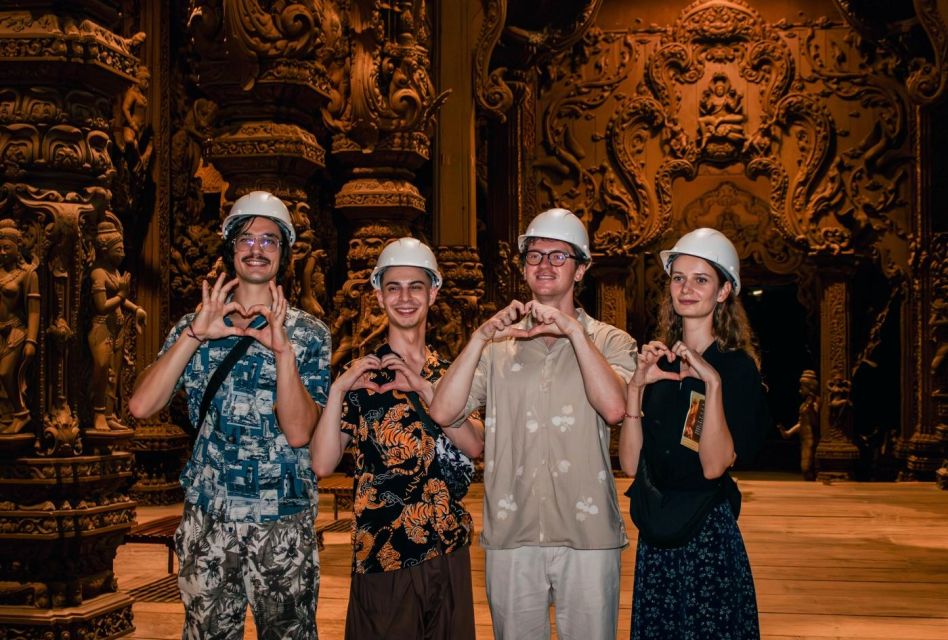
Pattaya is known for noise, nightlife, and big tourist energy. The Sanctuary of Truth is the opposite mood—quiet, architectural, and oddly personal. You’re walking around a massive wooden structure by the sea, where the craftsmanship isn’t just decoration. It’s the point.
The carvings are dense with meaning. The guide’s job is to connect the dots—what the carvings represent, how the themes connect to belief systems, and what you’re looking at beyond the obvious figures and ornament. In multiple accounts, guides like Sam, Pamela, Dim, Noon, Lay, Jack, PangPang, and Yes are praised for making the explanations clear and even funny when appropriate. That matters because the carvings can look overwhelming at first glance.
The architecture also changes your pace. This isn’t a quick “see it and move on” kind of place. Even if you think you’re only going to take a few photos, you’ll likely find yourself circling back to check another panel of carvings. A recurring theme in visitor comments is that you can’t believe humans did this—especially because it’s presented as a huge, ongoing project.
You can also read our reviews of more tours and experiences in Pattaya



Ticket value: what you pay for with the $15 admission

Your cost is about $15 per person, and the key value is what’s included. You get admission plus the guided museum tour. That guide time is the difference between “pretty carvings” and “I get what these carvings are trying to say.”
I also like that you’re not stuck in a rigid script. After the guide finishes, you can continue at your own pace. People specifically note that there’s time to take photos and to re-walk the site with the explanations in mind. That turns your visit into a two-pass experience: first you learn the language of the carvings, then you enjoy reading it without interruptions.
One fair caution: a small number of accounts call it a bit pricey for Thailand given what’s offered. I think that criticism makes sense if your goal is purely hands-on or you want a long list of activities. If your goal is craftsmanship, symbolism, and an architecture-first visit, the guide-included format is what helps justify the price.
Entering the site: voucher exchange and timing your arrival
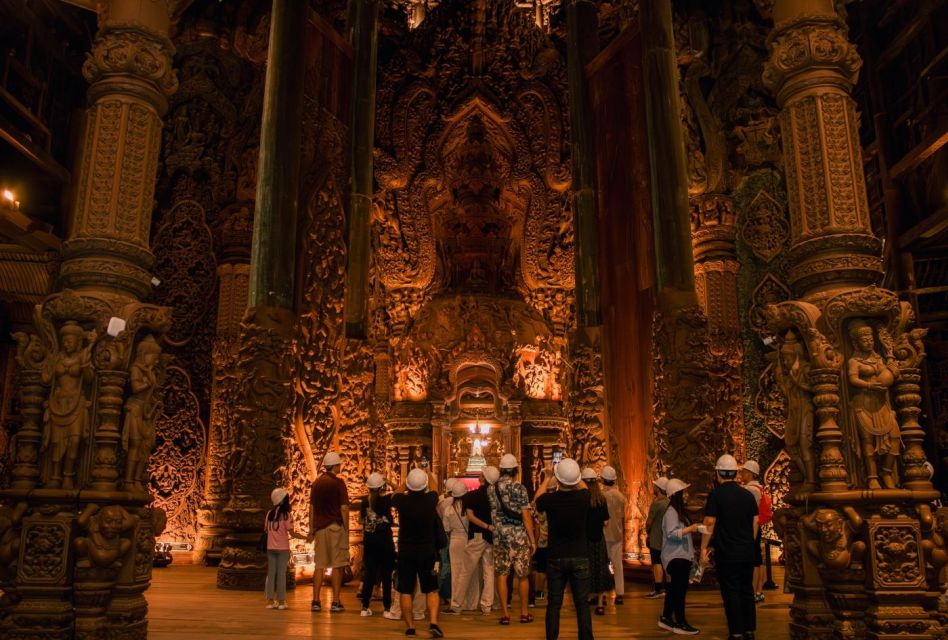
You meet up at the Sanctuary of Truth Museum area. Before the tour begins, you exchange your voucher at the ticket counter. The good news: it’s straightforward. The caution: ticket generation can take about 1 hour after you exchange the voucher.
That means you shouldn’t treat your arrival time as optional. If you arrive late, you may end up starting with less buffer than you want. I’d plan to show up with extra time so the pre-tour ticket process doesn’t shave minutes off your experience.
As for timing, the museum runs 8:00 AM to 6:00 PM for the day session, and 6:30 PM to 8:30 PM for the night session. The day session has you exchanging your voucher before 5:00 PM if you’re aiming for day entry. Also, same-day bookings must be made at least 1 hour in advance, so don’t assume you can wing it at the last minute.
The guided museum tour (45–60 minutes): how the guide changes everything
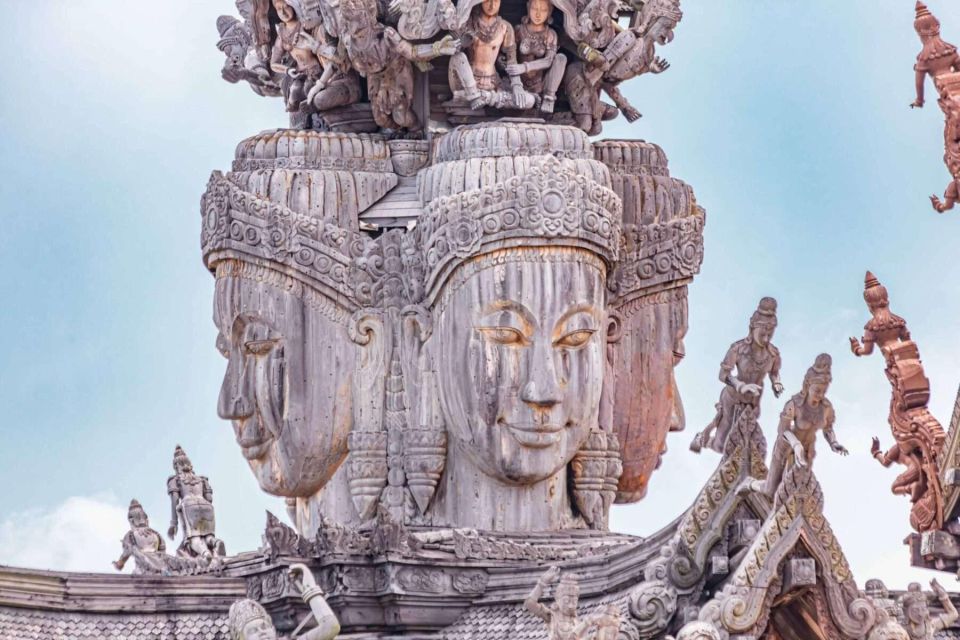
Most of your “aha moments” happen during the 45–60 minute guided portion. That’s when the carvings move from decoration into context.
Here’s what I think makes this tour work so well: the guide doesn’t just name figures. They explain the significance behind carving themes, symbols, and how the pieces connect to cultural and spiritual beliefs. Multiple guides are mentioned by name in visitor accounts—Sam, Pamela, Dim, Noon, Lay, and others. People also highlight that some guides add humor, which helps when the subject matter turns complex.
Group size can affect your comfort level. One account notes that it can be hard to hear a guide in large groups unless you’re close enough. So if you care about hearing every detail, consider choosing a time slot when the group feels manageable, or position yourself nearer to the guide during stops.
My practical tip: after the guided portion, do a second walk. You’ll notice far more the second time because your brain has a map now. That’s when you’ll spot patterns you would’ve missed on the first pass.
Walking the temple after the tour: photos, details, and the “still building” feel
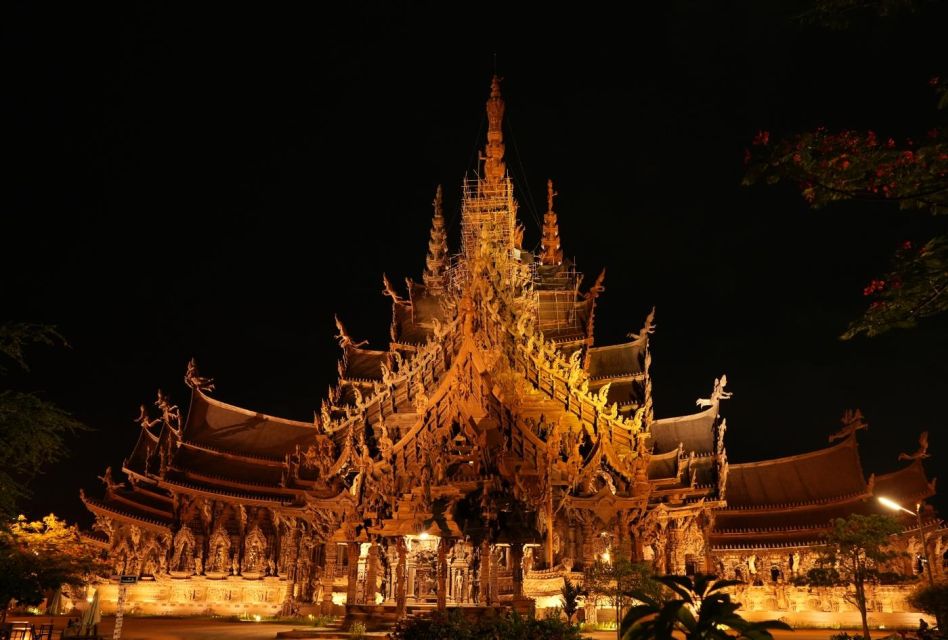
Once the guided museum tour ends, you’re free to keep walking. This is the section where the temple’s construction method really sticks in your head. Visitor accounts describe the structure as an interlocking wooden system without the usual metal fasteners you’d expect in modern construction. Whether you’re a structural nerd or just curious, it changes what you pay attention to.
Also, the site is described as still under construction. That makes the place feel alive rather than finished and sealed off. You’re seeing a major art and craftsmanship project in motion, with handwork as the ongoing process.
Plan your photo strategy. The site is big enough that rushing makes you miss details. People mention plenty of time to take great photos after the tour, but midday can be busy. If you’re the kind of person who wants clean frames without lots of heads in them, you may want to consider a less crowded time (the night session is one option because it’s shorter and typically feels calmer to some visitors).






Dress code and site rules: what will get you stopped
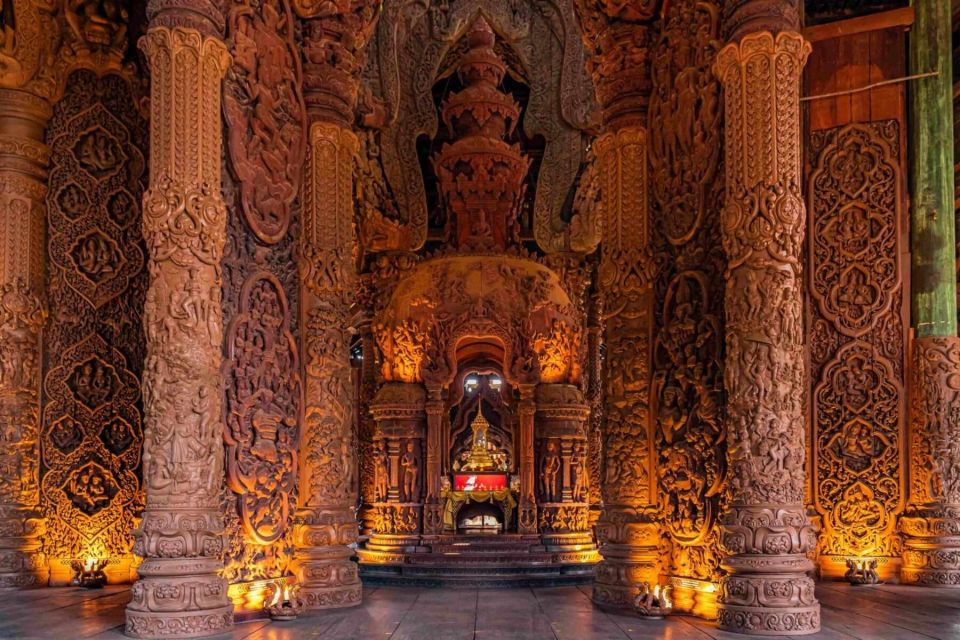
The Sanctuary of Truth doesn’t treat dress code as a suggestion. It’s enforced, because this is presented as a sacred atmosphere.
- No shorts
- No sleeveless shirts
- Smoking and alcohol are prohibited on-site
- Food and drinks aren’t allowed inside (you may find purchase options near the entrance area, but follow signage for what’s permitted where)
- Video recording is not allowed
- Drones are not allowed
- Pets are not allowed (assistance dogs are allowed)
If you show up underdressed, you can rent shawls and sarongs for a ฿200 deposit. That’s a lifesaver when you’re coming straight from beach time. I’d still aim to dress properly from the start—it avoids the hassle of being fitted and waiting at a rental desk.
One more thing: visitors describe the atmosphere as peaceful. I’d keep it that way. Move with respect, lower your voice, and treat the space like a place of ceremony, not just a photo set.
Day vs night session in Pattaya: pick the rhythm that suits you
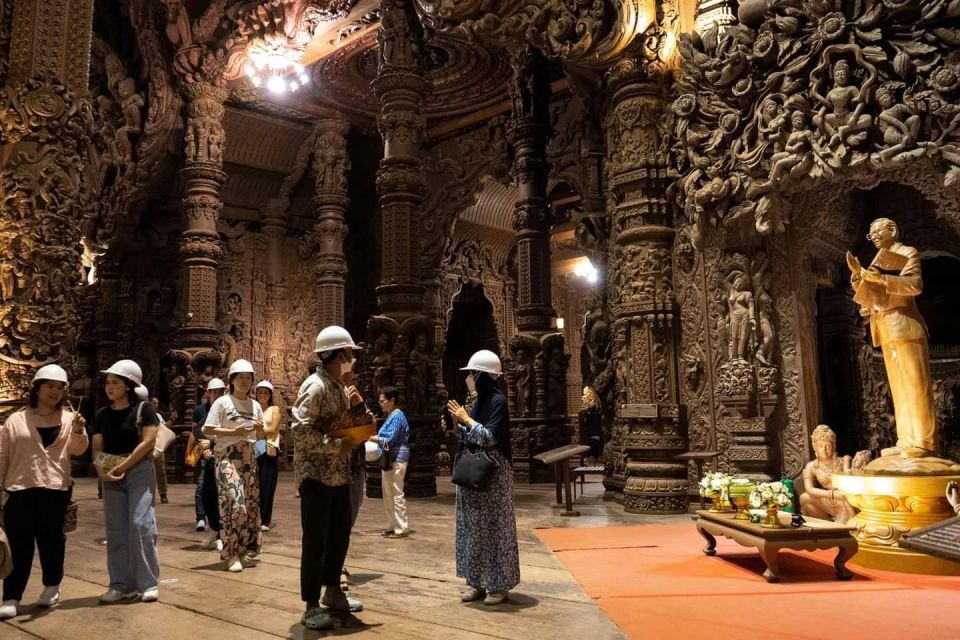
You have two sessions to choose from.
The day session runs 8:00 AM to 6:00 PM. English tours start repeatedly through the day, with departures listed from 9:10 AM all the way to 5:00 PM. Day entry is ideal if you want longer daylight hours for exploring and if you enjoy seeing how colors and textures shift in natural light.
The night session runs 6:30 PM to 8:30 PM. Some accounts suggest night admission can feel less crowded, which makes it easier to slow down and take photos. Still, be aware that the shorter evening window can make the experience feel more time-pressured depending on when your guided portion begins and when the site closes.
My advice: if you’re sensitive to crowds, lean night. If you want maximum time and lighting flexibility, go day.
Add-ons and on-site extras: what’s optional and what to think about
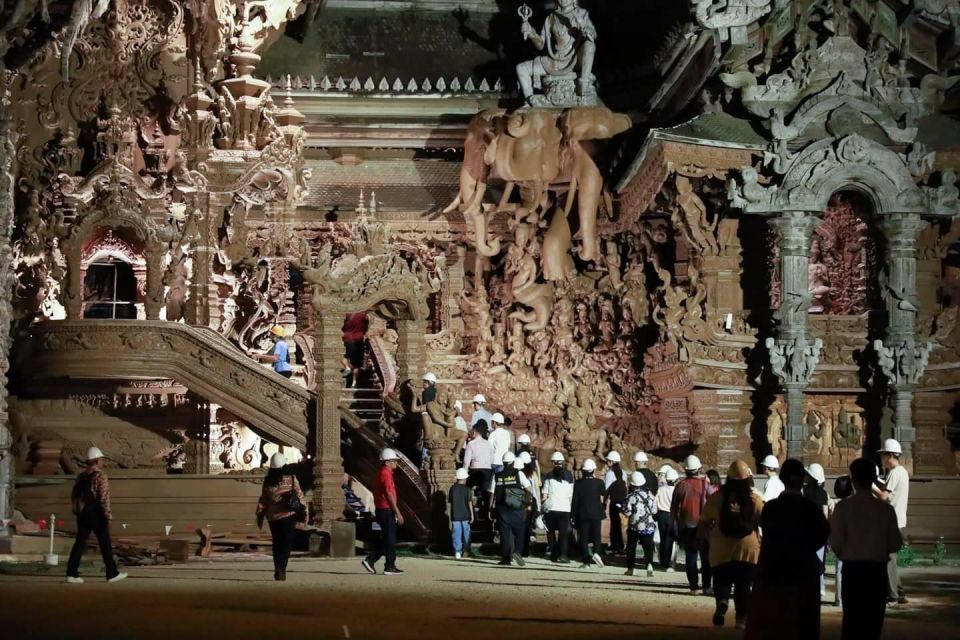
Your ticket covers admission and the guided tour. Extra activities—if you choose them—are paid separately through personal expenses.
From visitor accounts, on-site experiences may include things like boat rides (described as a rowing boat ride) and animal-related activities such as elephant and horse rides. Some people love these add-ons as a fun bonus. Others feel uncomfortable because the animals can look stressed or restrained, which clashes with the sanctuary philosophy of respect for life.
If you have strong feelings about animal welfare, I’d treat those extra activities as a personal decision and skip anything that makes you uneasy. Your visit is already worth it for the woodwork and the symbolism.
Also, you may see small paid extras like photo services and refreshments sold near the entrance area. Just remember: food and drinks rules inside the site can still apply, so don’t assume you can bring everything in.
Who should book, and who should rethink

This is a strong fit for you if you like:
- architecture and craftsmanship
- meaningful symbolism explained by a guide
- slow walking, photo time, and a calm mood even inside a tourist area
- a visit you can enjoy in a 2 to 4 hour window
It’s also a good family option on paper because there’s child pricing for kids 110–140 cm in height.
Reconsider if:
- you’re very focused on seeing a long list of activities (this is mainly the temple plus interpretation)
- you want total quiet at peak times (mid-day can be busier)
- you’d be upset by the presence of animal-related paid activities on-site
Accessibility note is a bit mixed in the provided details: it’s listed as wheelchair accessible, but also marked as not suitable for wheelchair users. If you use a wheelchair, don’t assume. Check directly with the operator before you commit. It’s also marked as not suitable for visually impaired people.
Should you book the Sanctuary of Truth ticket in Pattaya?
Yes—if you care about craftsmanship and you want a guided explanation that turns wood carvings into something you can actually understand. The guide-included ticket format is the best part, and the interlocking wooden architecture is the kind of thing you’ll remember long after Pattaya’s louder scenes fade.
Book it if you:
- want a meaningful break from Pattaya’s typical pace
- enjoy museums where the details reward patience
- prefer a visit built around a short, focused guided tour and then free wandering
Skip or rethink if:
- you hate dress code rules and want a super casual outing
- you dislike crowds and hate the idea of timing your visit carefully
- you’re uncomfortable with animal-related add-ons that may be available for purchase
If you’re on the fence, choose your session wisely. Day gives you more time. Night can feel calmer. Either way, come with covered shoulders and a slow mindset—and get ready to stare at woodwork like it’s a language.
FAQ
How long does the Sanctuary of Truth visit take?
A typical visit lasts about 2 to 4 hours, including a guided museum tour of roughly 45 to 60 minutes plus time to walk around afterward.
Is the guided tour included with the ticket?
Yes. The admission ticket includes a guided museum tour as part of your visit.
What are the opening times for day and night sessions?
The day session runs 8:00 AM to 6:00 PM, and the night session runs 6:30 PM to 8:30 PM.
What times do English tours run?
English tours have many daily start times listed from 9:10 AM through 5:00 PM.
Do I need to exchange a voucher for tickets?
Yes. You must exchange your voucher at the ticket counter before the tour begins, and it takes about 1 hour to generate the ticket after the voucher exchange.
What should I wear to enter?
Modest attire is required. Shorts and sleeveless shirts are not permitted inside the temple area. Shawls and sarongs are available for rent with a ฿200 deposit.
Can I record video or use a drone?
No. Video recording is not allowed, and drones are not allowed.
Are pets allowed?
Pets are not allowed. Assistance dogs are allowed.
Is there free cancellation?
Yes. You can cancel up to 24 hours in advance for a full refund.
Is the site wheelchair accessible?
It’s listed as wheelchair accessible, but it’s also marked as not suitable for wheelchair users. If you’re using a wheelchair, check directly before booking.